Bob
Bob
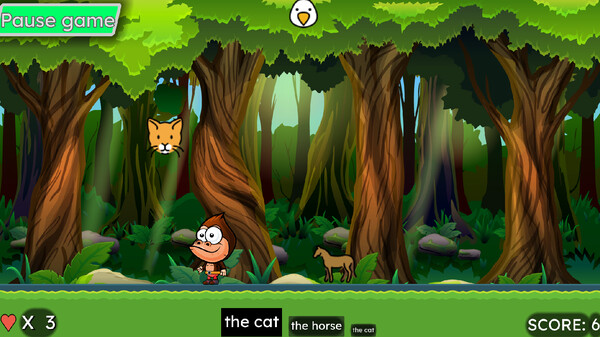
You have been studying a language for six months.
You can introduce yourself, order coffee, count to 100, and ask where the bathroom is.
Then you start a video game in that language.
A character runs toward you and shouts something urgent. A timer appears. Three unfamiliar buttons flash on the screen. Somewhere nearby, a village is apparently on fire.
You understand none of it.
This may not feel like progress.
But after several hours, something strange begins to happen.
You recognize the word for “sword.” You know which button means “continue.” You understand when a shopkeeper says something is too expensive. You can tell that one character is threatening you and another wants you to collect six mushrooms from a forest.
You may not be fluent.
But you are learning.
Research generally supports the idea that digital games can help people develop second-language vocabulary and other language skills. Meta-analyses have found positive effects from game-based language instruction, although results depend heavily on the game, learner, teaching method, and way progress is measured.
So yes, video games can help you learn a language.
They simply do not do it automatically.
Here is what games can teach, what they usually cannot teach alone, and how to play in a way that produces more than an impressive knowledge of fictional vegetables.
1. Games give words a reason to matter
A vocabulary list may tell you that key means an object used to open a lock.
A game puts you inside a locked room.
Now the word matters.
You search a desk, inspect a cabinet, read a note, and finally find the key. When the same word appears again two hours later, it is no longer an isolated item on a flash card.
It is the thing that prevented you from escaping the haunted library.
This is one reason games can support vocabulary learning. Words appear beside actions, objects, images, sounds, and consequences. A study involving a healthcare game found that contextual clues and repeated exposure helped participants acquire vocabulary while they were also learning subject matter.
The game does not merely define the word.
It demonstrates why you need it.
That creates a stronger memory than seeing the same word once in a list titled “Important Nouns: Chapter 7.”
2. Games repeat vocabulary without feeling like repetition
Traditional language practice often works through deliberate repetition.
Read the word.
Say the word.
Write the word.
Cover the answer.
Forget the word.
Become mildly angry at the word.
Repeat.
Games also repeat language, but they often hide the repetition inside play.
You repeatedly see words such as:
- Save
- Load
- Enter
- Leave
- Buy
- Sell
- Equip
- Accept
- Cancel
- Warning
- Health
- Damage
- Mission
At first, you may translate each one.
Eventually, you stop translating and simply respond.
You see the command and press the correct button.
That change matters. The word is becoming connected directly to an action rather than traveling through your native language every time.
Research on game-based vocabulary learning frequently identifies repeated exposure as an important part of the process. However, repetition works best when learners pay attention to the language rather than clicking through it automatically.
A game may show you the same phrase 40 times.
Whether you learn it depends partly on whether you ever stop to notice what it says.
3. You learn vocabulary that normal courses may never teach
Language courses usually begin with practical subjects:
- Family
- Food
- School
- Travel
- Weather
- Work
- Shopping
Video games may teach you:
- Enchantment
- Siege
- Potion
- Harvest
- Betrayal
- Ammunition
- Dungeon
- Respawn
- Blacksmith
- Intergalactic customs inspection
Some of these words are not immediately useful during an ordinary vacation.
You probably will not need to explain that your village is under siege while checking into a hotel.
But game vocabulary is not always as useless as it appears.
Role-playing games teach words related to personality, relationships, negotiation, morality, nature, and objects. Strategy games introduce economics, government, geography, and conflict. Simulation games may teach vocabulary related to farming, transportation, construction, medicine, or business.
Adventure games can be especially useful because progress often depends on reading dialogue and understanding descriptions. Classroom research involving an adventure game found that it could support vocabulary recall when paired with supplementary learning activities.
The best game is not necessarily the one containing the most educational words.
It is the one containing language you care enough to understand.
4. Games make you tolerate not understanding everything
This may be one of their greatest benefits.
Language learners often believe they must understand every word before continuing.
They read one sentence, encounter an unfamiliar term, stop, open a dictionary, read four definitions, become distracted by an example sentence, and eventually forget what the original paragraph was about.
Games usually do not wait.
The music continues. Characters move. The mission begins. Something nearby may still be on fire.
You learn to make reasonable guesses from context.
Perhaps you do not understand the entire instruction, but you recognize:
- The name of a location
- The number three
- A picture of a wolf
- An arrow pointing toward the forest
You can probably guess that the game wants you to find three wolves in the forest.
This is similar to a real conversation. Native speakers will use unfamiliar words. Background noise will interfere. Someone will speak too quickly. You must identify enough meaning to continue.
Games let you practice being partially confused without treating confusion as failure.
That is an important language skill.
5. Mistakes become less embarrassing
Speaking a new language in front of another person can feel terrifying.
You know the sentence.
You practiced the sentence.
Then someone looks at you and your entire vocabulary quietly leaves through an emergency exit.
Games create a lower-pressure environment.
You can choose the wrong dialogue option, reload an earlier save, and try again. You can misunderstand an instruction without disappointing a teacher or confusing a cashier.
Even multiplayer games may feel less intimidating because attention is focused on a shared task rather than on perfect grammar.
You are not delivering a speech.
You are trying to stop your team from being eaten by a large digital monster.
The danger is fictional, but the communication is real.
6. Multiplayer games can force you to communicate
Single-player games expose you to language.
Multiplayer games may require you to produce it.
You might need to:
- Ask another player for help
- Explain where an enemy is located
- Negotiate a trade
- Follow instructions
- Warn teammates
- Apologize for a mistake
- Coordinate a strategy
- Participate in a guild or community
Recent research comparing role-playing formats suggests that combining single-player and multiplayer experiences may be useful for incidental vocabulary development rather than relying on only one format.
Single-player games give you time to read and process.
Multiplayer games give you a reason to respond.
Together, they can create a useful cycle:
See the language → understand the language → use the language → discover that you used it incorrectly → try again.
That final step is where a great deal of learning happens.
7. Games connect words to images and sound
A word in a textbook may appear as black text on a white page.
A word in a game may appear alongside:
- A spoken line
- A character’s expression
- An animated action
- A sound effect
- An object
- A map
- A visual symbol
- A consequence
This creates multiple clues.
You may not recognize the written word for danger, but you hear an alarm, see a red warning symbol, and watch everyone run away.
The game has made a fairly convincing argument about what the word means.
This kind of multimodal context can support incidental vocabulary learning, particularly when important words appear repeatedly and are connected to meaningful actions.
Games are especially helpful when the written and spoken language appear together.
You hear the line.
You read the subtitle.
You watch the action.
Your brain receives several opportunities to understand what is happening.
8. Games can train reading speed
Textbooks are patient.
Games are not always patient.
Dialogue may disappear after a few seconds. Messages may arrive during action. Other players may type quickly. Menus may require rapid decisions.
This pressure can gradually improve reading speed.
At first, you translate nearly every word.
Later, you begin recognizing common phrases as complete units:
- What are you doing?
- Follow me.
- I don’t know.
- Be careful.
- We need more.
- Where did you find it?
- That is not possible.
Recognizing phrases is faster than decoding every word separately.
However, a game that is far above your current level may not train reading speed effectively. It may simply produce a colorful wall of incomprehensible text.
The ideal level is difficult enough to expose you to new language but familiar enough that you can still follow the main action.
You should feel challenged.
You should not feel like you accidentally installed the tax code in another language.
9. Games can help with listening—but only when you actually listen
Voice acting gives learners access to different speeds, accents, emotions, and speaking styles.
Characters whisper, shout, mumble, joke, interrupt one another, and speak while explosions happen nearby.
This resembles real life more closely than a recording in which two actors calmly ask each other where the library is.
Games can help learners connect spoken language with written subtitles. But there is an important trap:
You may read every subtitle and ignore the audio completely.
Your eyes understand the scene while your ears take the evening off.
To practice listening, try replaying important scenes, reducing reliance on native-language subtitles, or listening once before checking the written text.
Research on captioned audiovisual material shows that captions can support vocabulary learning, although repetition, existing proficiency, and the type of material influence the results.
Subtitles are not cheating.
They are support.
The goal is to use less support as your listening improves.
10. Games are very good at motivation
Many language-learning plans fail for a simple reason:
The learner stops using them.
The best textbook in the world cannot teach someone who refuses to open it.
Games are designed to sustain attention through goals, rewards, curiosity, challenge, progress, and immediate feedback. You may continue reading unfamiliar language because you want to know what happens next.
That motivation matters.
A person who studies perfectly for 20 minutes and quits after one week may learn less than a person who plays imperfectly for six months.
A 2026 meta-analysis of informal digital language learning found a positive, moderate association between informal digital activity and second-language achievement across a large collection of studies and participants. The result does not prove that every digital activity causes improvement, but it supports the idea that meaningful engagement outside formal lessons can contribute to learning.
Games do not make learning effortless.
They can make the effort easier to repeat.
11. Educational games are not always the best language games
A game designed specifically for language learning sounds like the obvious choice.
Sometimes it is.
Educational games can organize vocabulary by level, provide immediate corrections, introduce grammar carefully, and track progress.
They may also feel like worksheets wearing a cartoon hat.
Commercial games are not usually designed to teach language. That can make them difficult, but it also makes the communication feel meaningful.
You are not selecting the correct verb because the lesson says so.
You are selecting it because a fictional detective needs an answer and you would very much like to discover who stole the cursed painting.
Both kinds of games can help.
Educational games are useful for focused practice.
Commercial games are useful for immersion, context, extensive exposure, and motivation.
A strong learning plan can use both.
12. Some game genres are much better than others
A racing game may contain only a few menus and announcements.
A dialogue-heavy role-playing game may contain hundreds of thousands of words.
Both are games.
They are not equally useful for language learning.
Strong choices
Role-playing games: Rich dialogue, quests, item descriptions, and repeated vocabulary.
Adventure games: Reading and comprehension are often required to solve problems.
Life simulations: Everyday vocabulary related to homes, relationships, jobs, food, and routines.
Strategy games: Political, military, geographical, and economic language.
Visual novels: Large amounts of written dialogue with images and character context.
Multiplayer games: Opportunities for real communication with other players.
More limited choices
Racing games: Useful menus, but often little sustained language.
Fighting games: Repeated commands and character lines, but limited vocabulary.
Sports games: Useful for fans learning sports-related language, but narrower in scope.
Games with almost no text or speech: Excellent entertainment, not necessarily excellent language input.
The important question is not simply, “Is this a video game?”
Ask:
Does understanding the language help me play?
When the answer is yes, learning becomes part of the game.
13. Translation can help—but constant translation can ruin the effect
Looking up words is useful.
Looking up every word is exhausting.
It also interrupts the experience so often that you may stop playing or stop following the story.
Try dividing unfamiliar words into three groups:
Words you must understand now
The mission cannot continue until you understand the instruction.
Look these up.
Words that appear repeatedly
You have seen the same word six times and still do not know it.
Look these up too.
Words that probably do not matter
A character used an obscure adjective to describe a decorative curtain.
Let the curtain remain mysterious.
This approach helps you learn important language without turning a game into a slow-moving dictionary exercise.
You do not need to understand 100% of the text.
You need enough understanding to follow the story, make decisions, and notice recurring language.
14. Games will not automatically teach you grammar
Games expose you to grammar.
That is not the same as explaining it.
You may see a verb form hundreds of times and gradually develop an intuitive sense of how it works. But you may not understand why it works or know how to create the form yourself.
This is where formal study remains useful.
A grammar guide can explain in ten minutes what you might spend months vaguely noticing during play.
Games provide examples.
Lessons provide structure.
Using both is usually more effective than demanding that one method perform every job.
You can think of grammar study as receiving the map and gaming as walking through the territory.
A map without travel remains abstract.
Travel without a map can involve a great deal of unnecessary wandering.
15. Games usually do not correct your language
A single-player game does not care whether you can construct a sentence.
It only cares whether you selected the correct option.
A multiplayer teammate may understand your broken message and continue playing without correcting it.
This is good for communication but imperfect for accuracy.
You might repeatedly use the wrong grammar and never discover the mistake because your meaning remains understandable.
Games need to be combined with some source of feedback:
- A teacher
- A tutor
- A language-exchange partner
- A knowledgeable friend
- Corrected writing
- A reliable grammar resource
- A learning community
Communication tells you whether the message worked.
Feedback tells you how to make it better.
16. You may learn to recognize words without being able to use them
This is a common language-learning illusion.
You see a word and understand it immediately.
Then someone asks you to produce the same word, and your mind offers only silence.
Recognition is easier than recall.
Games often train recognition because you read dialogue, interpret menus, and select from prepared options.
To make vocabulary active, you must use it outside the original context.
After playing, try:
- Writing a short summary of what happened
- Describing your character
- Retelling a mission aloud
- Recording new words in sentences
- Discussing the game with another learner
- Writing a review in the target language
The goal is to take language out of the game and make it available elsewhere.
Otherwise, you may become capable of understanding a royal wizard perfectly while remaining unable to describe your weekend.
17. The language setting matters
There are several ways to configure a game:
Target-language audio with native-language subtitles
Good for beginners who want exposure without losing the story.
The danger is that you may read only your native language.
Native-language audio with target-language text
Useful for reading practice, although the spoken and written meanings may not match exactly.
Target-language audio and target-language subtitles
Often the strongest setup for intermediate learners because you can connect sounds with written forms.
Target-language audio with no subtitles
Excellent listening practice for advanced learners.
Potentially excellent confusion practice for everyone else.
The best setting is one that allows you to understand most of the experience while still noticing new language.
You can change the setup as you improve.
Language learning is not a purity test. Using subtitles at the beginning does not disqualify you.
18. Playing a familiar game can be surprisingly effective
One of the easiest ways to begin is to replay a game you already know.
You understand the world, controls, characters, and general story. That knowledge gives you context when the language changes.
You may not understand a sentence, but you remember what the character is probably saying.
This reduces the mental burden.
Instead of learning a new game and a new language simultaneously, you use your memory of the game to support the language.
Games with repeated routines are also helpful. Farming, crafting, shopping, managing an inventory, and completing familiar missions repeatedly expose you to the same vocabulary.
You do not need a special educational product.
You may only need to change the language setting on something you already enjoy.
19. A simple notebook can make gaming much more effective
You do not need to record every unknown term.
Choose five to ten useful items during each session.
For each one, write:
- The word or phrase
- What you think it means
- The sentence or situation in which it appeared
- A new sentence of your own
The final step is important.
Copying a word records it.
Using the word begins to teach it.
Review the notes before your next gaming session. You may notice the same vocabulary again, which strengthens the connection.
The notebook does not need to become a second job.
The purpose is to turn a small part of an entertaining activity into deliberate practice.
20. The best results come from combining games with other methods
Video games can be excellent for:
- Motivation
- Vocabulary exposure
- Reading practice
- Context
- Listening
- Repetition
- Informal communication
- Learning to tolerate ambiguity
They are less reliable for:
- Systematic grammar instruction
- Pronunciation correction
- Formal writing
- Balanced everyday vocabulary
- Accurate speaking feedback
- Measuring what you have learned
That means the strongest plan is not video games instead of language study.
It is video games as part of language study.
You might combine:
- 20 minutes of structured lessons
- A vocabulary review
- One hour of gaming in the target language
- A weekly conversation
- A short written summary of what you played
The structured work explains the system.
The game makes the system feel alive.
How to turn your next game into a language lesson
Here is a simple method that does not require transforming recreation into homework.
Step 1: Choose a game with meaningful language
Pick something containing dialogue, descriptions, missions, choices, or communication.
Step 2: Start with a familiar game
Knowing the mechanics and story will make the new language easier to interpret.
Step 3: Use target-language audio and subtitles when possible
This helps connect written and spoken forms.
Step 4: Look up only important or repeated words
Do not stop for every decorative adjective.
Step 5: Save five useful phrases per session
Choose language you might realistically encounter again.
Step 6: Use the phrases yourself
Write a summary, speak aloud, or discuss the game with someone.
Step 7: Keep playing consistently
One enormous weekend session is less useful than repeated exposure over several weeks.
Step 8: Continue formal learning
Use lessons, grammar explanations, feedback, and conversation to fill the gaps games leave behind.
So, can video games actually teach you a language?
They can help teach one.
That distinction matters.
A game can expose you to thousands of words, make you read quickly, improve your tolerance for uncertainty, and give you powerful reasons to understand what people are saying.
It can provide repetition without making every repetition feel like study.
It can connect language to places, characters, emotions, decisions, and memorable disasters involving fictional villages.
But a game cannot guarantee that you will pay attention.
It may not correct your grammar, improve your pronunciation, or teach you how to participate in an ordinary conversation. You can spend 500 hours playing in another language and still possess a vocabulary strangely concentrated around medieval weapons.
Video games work best when they become one part of a larger learning system.
Study gives you the rules.
Conversation gives you feedback.
Games give you a world in which the language matters.
And sometimes the moment a new language begins to feel real is not when you pass a test.
It is when a character gives you an instruction, you understand it without translating, and you save the village before it burns down again.