Ailie Macquarie
Why I Decided to Go Cash-Only (Like It’s 1995)
It all started with a TikTok rabbit hole.
You know the one—people pulling envelopes out of binders like they’re casting spells. “Cash-stuffing changed my life,” they say. “Watch me budget like a boss,” they whisper, while tucking twenties into little labeled slots.
Cut to me: staring at my bank app wondering why am I always broke even though I swear I don’t buy anything??
So I did the unthinkable.
I turned off Apple Pay.
I retired my debit card.
I even hid my credit card in a drawer labeled “Danger Zone.”
And I took out… cash. Actual paper money. Like I was living in 1995 again. (All that was missing was a Walkman and a Blockbuster membership.)
🧪 The Rules of the Challenge Were Simple-ish:
-
❌ No credit cards
-
❌ No debit cards
-
❌ No mobile payments
-
✅ Only real, foldable, crinkly, lose-it-and-it’s-gone cash
Was this going to teach me financial discipline? Or just make me awkwardly explain myself at every café and grocery store checkout for the next 30 days?
Either way, I was in.
This was going to be part experiment, part chaos, and hopefully a little eye-opening.
Let the awkward ATM runs begin.
💵 Week 1: The High of Holding Real Money
I’m not gonna lie: Day 1 felt kind of… powerful.
There’s something weirdly satisfying about physically counting out crisp $20s like you’re a budget-savvy mob boss. You feel in control. Like, “Look at me, I’m financially responsible and also possibly about to buy a used car in cash.”
But then came the unexpected perks:
-
🧠 Greater awareness of spending
Every time I pulled out my wallet, I was painfully aware that I was trading real paper for something dumb like a muffin. Suddenly, $4.75 felt outrageous. -
☕ More appreciation for small purchases
That $3 coffee? A choice. A moment. Not a mindless tap on a screen. Cash made me feel the transaction. It slowed me down—and weirdly, made the coffee taste fancier. -
📦 No more 1 AM Amazon spirals
My card was locked away. No card = no checkout. Which meant no buying that mini waffle maker I absolutely didn’t need. Sorry, Prime.
And the biggest “a-ha” moment?
Watching my stack of bills shrink by the week. Like a budget countdown clock sitting in my pocket. It was thrilling. It was terrifying. It was real.
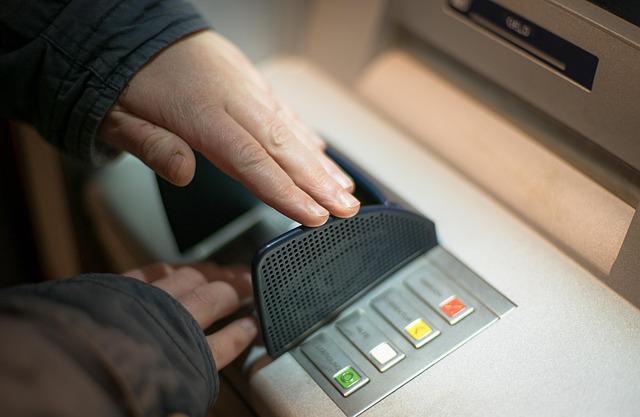
🏧 Week 2: Welcome to ATM Town (Population: Me and Regret)
If Week 1 was the honeymoon phase, Week 2 was the hangover.
Welcome to ATM Town—where the sidewalks are made of fees and no one has the right change.
Let’s talk about the awkward ATM runs:
-
🏦 I became a human GPS for no-fee ATMs. Did I walk six blocks out of my way to avoid a $3.25 surcharge? Yes. Was it worth it? Debatable.
-
💸 Needed $3.75 for parking, only had a $20. Cue the awkward “Can you break this?” routine at three different gas stations.
-
🤝 Caught myself saying “Can I Venmo you and you give me cash?” like I was in some kind of back-alley money exchange.
Then came the social side effects:
-
👯 Splitting bills with friends became a logistical nightmare. “Wait, I only have a twenty… Can someone spot me and I’ll Zelle you later?” became my catchphrase.
-
🧁 Explaining yourself at coffee shops was weird. “Yes, I’m paying in cash. No, I don’t have a punch card. Yes, I’m okay with that.”
-
💁♂️ Tipping with big bills felt like a power move—but also made me look unhinged. “Here’s a $10 tip on a $2 latte because I only have tens and I’m too embarrassed to ask for change.”
By the end of Week 2, I was questioning everything. Like, why does modern life make it so hard to use the literal money we used for centuries?
🧾 Week 3: The Bad — When Cash Fails You
This is the part of the story where reality hits harder than a bounced rent check.
Going cash-only sounds charming until you remember:
the entire modern world runs on plastic and pixels.
Let’s just say Week 3 was… humbling.
-
💻 Online shopping? Canceled.
You know how you forget you need something until you really need it? That moment I needed socks, a new phone charger, and toothpaste all at once… RIP. Amazon was off-limits. I walked to an actual store like it was 2004. -
🧾 Paying bills became a side quest.
Rent? Utilities? Internet? They don’t exactly take crumpled fives in an envelope. I had to go through so many extra steps, I almost started bartering chickens. -
😰 Running out of cash = instant panic.
You don’t know fear until you realize you only have $4.25 left and three days until payday. No quick app transfers. No backup card. Just you, your sad wallet, and the echo of regret. -
📉 Budgeting was a mess.
No app = no clean data. I was relying on receipts I shoved in my bag and vague memory. I actually asked myself, “Did I spend $20 at the grocery store? Or was that on a burrito…?” -
💼 And the worst fear of all: losing your wallet = game over.
If I had lost my wallet during Week 3, that would’ve been my entire bank—gone. You don’t realize how vulnerable cash makes you until you start guarding your jeans pocket like it holds ancient treasure.
Bottom line: cash has its charm, but the 21st century is not built for this. You will suffer.
💡 Week 4: Lessons Learned from Living That Paper Life
Despite all the chaos, somewhere around Week 4… something weird happened.
I started to get it.
There’s something kind of magical about living with physical money. Not convenient, but magical.
Here’s what I learned:
-
🧠 Spending became intentional.
Swiping a card feels fake. Handing over actual cash? You feel it. I questioned every purchase—Do I really need this? Am I okay watching my cash pile shrink? -
🧽 I started rethinking what I actually need.
Want a cold brew every morning? Sure. But do I need it when it means breaking a $20 and living off singles for two days? Not so much. -
🫀 You develop an emotional connection to your money.
That $10 bill? It’s not just currency—it’s potential. It could be lunch. Or a ride. Or two thrifted T-shirts. It made me treat money with more respect, not just as a number in an app. -
🔍 You discover your spending habits—especially the ones you’re ashamed of.
Cash forces you to confront your habits face-to-face. That $7 impulsive snack run? It’s no longer invisible behind a tap. It’s there. In your hand. In your pocket. In your guilt.
By the end of Week 4, I wasn’t cured of bad spending—but I was aware. And that’s half the battle.
📊 The Final Breakdown: Did I Save Money?
So… did going cash-only actually work?
Let’s look at the receipts (literally):
-
💳 Previous month (cards and mobile pay): $1,042
-
💵 Cash-only month: $827
That’s $215 saved—aka a plane ticket, a fancy dinner, or 43 lattes (not that I’m counting).
💥 Biggest Difference? Impulse Spending.
No late-night scroll-to-buy. No surprise Amazon packages. Just… silence. And self-control.
😢 What I Missed Out On:
-
🪙 Credit card points (goodbye, dream vacation)
-
🎁 Cash-back rewards
-
🔔 Push notifications that remind me I just spent $8 on crackers
So was it worth it?
For me—yes. For my bank account—definitely yes.
✅ The Good
-
More intentional spending
I felt every dollar leave my hands. Sometimes emotionally. -
Less temptation
No tap-to-buy = fewer instant regret purchases. -
Eye-opening awareness
Every transaction was personal. Even buying gum felt like a decision.
❌ The Bad
-
Painfully inconvenient
The 21st century is not built for the cash lifestyle. -
ATM fees
I paid $3.25 once just to access my own money. It hurt. -
Harder to track
No automatic logs or fancy graphs—just messy receipts and wishful thinking. -
Social awkwardness
“Can I pay with cash?” is the new “I forgot my password.”
😂 The Awkward
-
ATM machine shame
Why are these things always broken, hidden, or charging $6? -
Explaining yourself to confused baristas
“Yes, I really am paying with exact change. No, I’m not 85.” -
Losing track of your crumpled fives
I found $10 in my hoodie pocket like I was on a game show.
💬 Conclusion: Will I Keep Using Cash?
Will I go full cash-only forever?
Nope. I like online shopping and not crying at ATMs.
But will I go hybrid?
Absolutely. I now carry a set cash budget for food, fun, and “treat yourself” days. It works.
💡 Who Should Try This?
-
Chronic impulse spenders
-
Budget beginners
-
Anyone who wants to reset their money mindset
🏁 Your Turn: Take the Challenge
Try going cash-only for 3–7 days.
Track what you spend. Watch what changes. You might be shocked (and slightly annoyed, in the best way).
And hey, if nothing else—you’ll finally know where that $20 went.